As families head into summer, it is a good time for parents and caregivers to understand what today’s youth are seeing, hearing, and potentially being offered when it comes to alcohol, vaping, THC products, and other substances.
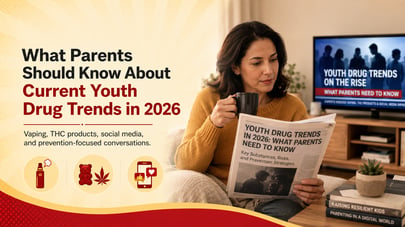
The good news is that many teens are choosing not to use substances. National data from the 2025 Monitoring the Future survey showed that reported use of most drugs remained relatively low among U.S. teens, with many students reporting no recent use of marijuana, alcohol, or nicotine. Still, prevention matters because the products, risks, and ways youth are exposed continue to change.
Vaping Is Still a Major Youth Prevention Concern
Vaping remains one of the most important substance use prevention topics for parents, schools, and communities. According to the FDA and CDC, e-cigarettes were still the most commonly used tobacco product among U.S. youth in 2024, with 1.63 million middle and high school students reporting current e-cigarette use.
Parents should know that many vape products are easy to hide, flavored to appeal to youth, and often disposable. More than 8 in 10 current youth e-cigarette users reported using flavored e-cigarettes, and disposables were the most commonly used device type among current youth users.
This is not just a school issue. Teen vaping can affect attention, learning, mood, and impulse control because most e-cigarettes contain nicotine, which is highly addictive and can harm the developing adolescent brain.
THC Products Are Not Always Easy to Recognize
Another current youth drug trend parents should watch is the growing variety of THC and cannabis-related products. These may include vapes, gummies, edibles, drinks, hemp-derived products, and products marketed with terms like delta-8 THC.
In 2025, the Monitoring the Future survey found that cannabis use remained stable among teens, with 8% of eighth graders, 16% of 10th graders, and 26% of 12th graders reporting cannabis use in the past 12 months. The same survey also found that some teens reported using intoxicating hemp-derived cannabis products, including delta-8 THC.
For parents, the concern is not only whether a product is called “marijuana,” “cannabis,” “hemp,” or “THC.” The concern is that these products can affect a young person’s brain, judgment, memory, attention, and school performance. CDC notes that cannabis use can have lasting effects on the developing brain, especially when use begins in adolescence or becomes regular or heavy.
Alcohol Prevention Still Belongs in the Conversation
While vaping and THC products often get a lot of attention, alcohol prevention is still important. The 2025 Monitoring the Future survey reported that alcohol use remained stable, with 11% of eighth graders, 24% of 10th graders, and 41% of 12th graders reporting alcohol use in the past year.
Summer can bring more free time, parties, sleepovers, travel, and less structured routines. That makes it a smart time for parents to talk clearly about family expectations around alcohol, vaping, drugs, and impaired decision-making before situations come up.
Counterfeit Pills and Fentanyl Are Serious Risks
Parents should also talk to teens about counterfeit pills. The DEA warns that counterfeit pills can be made to look like prescription medications, and the only safe medications are those prescribed by a trusted medical professional and dispensed by a licensed pharmacist.
This matters because youth may not always understand the risk of taking a pill from a friend, peer, or online source. The DEA’s “One Pill Can Kill” campaign emphasizes that even a very small amount of fentanyl can be deadly.
Social Media Can Normalize Substance Use
Social media is another factor parents should keep in mind. CDC data found that 77% of U.S. high school students reported using social media at least several times a day.
Teens may come across videos, memes, influencers, or peer content that makes vaping, THC products, alcohol, or other substances look normal, funny, harmless, or trendy. A 2025 JAMA Network Open study found that adolescent exposure to e-cigarette or cannabis posts on social media was associated with e-cigarette, cannabis, or dual use among youth.
That does not mean every teen who sees this content will use substances. It does mean parents should ask what their children are seeing online and help them think critically about what is being promoted.
Warning Signs Parents Should Watch For
Not every mood change or behavior shift means substance use is happening. Teens are growing, changing, and navigating a lot. However, parents should stay connected enough to notice patterns, especially if several changes happen at once.
Possible warning signs may include increased secrecy, sudden changes in friend groups, missing money, slipping grades, changes in sleep, unusual smells, unfamiliar devices, vape cartridges, eye drops, changes in appetite, or a teen becoming more withdrawn than usual.
The goal is not to accuse. The goal is to stay aware, ask calm questions, and create a safe place for honest conversation.
Prevention Conversations Should Start Before There Is a Problem
One of the most important things parents can do is talk early, talk often, and keep the conversation open. SAMHSA’s “Talk. They Hear You.” campaign encourages parents and caregivers to address alcohol and other drug use early and often, not just after a concern appears.
A prevention-focused conversation can sound simple:
“What are kids at school saying about vaping?”
“Have you seen THC gummies or vape videos online?”
“What would you do if someone offered you a pill or vape?”
“You can always call me if you are uncomfortable or need help.”
“Our family rule is clear: no alcohol, vaping, THC, or drug use.”
These conversations work best when they are calm, specific, and ongoing. A single lecture is easy to tune out. Small, repeated conversations build trust over time.
Prevention Works Best When Families, Schools, and Communities Work Together
Youth substance use prevention is not only a parent responsibility. It is a community responsibility.
Informed Families provides prevention education presentations at schools, summer camps, youth programs, and community events to help young people understand the risks of alcohol, drugs, vaping, THC products, and other substances. These presentations are designed to be age-appropriate, engaging, and focused on healthy decision-making.
As summer approaches, now is the time to bring prevention education into the places where youth already are. When families, schools, camps, and community organizations work together, we can help children and teens feel informed, supported, and prepared to make healthy choices.
Interested in bringing substance use prevention education to your school, summer camp, or youth organization? Contact Informed Families to learn more.




